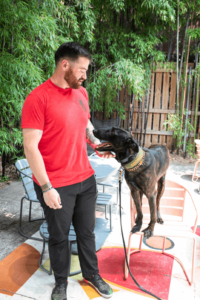
Choosing to train a service dog is one of the most meaningful decisions a handler can make. A well trained service dog restores independence, steadies daily routines, and opens doors that a disability can otherwise close. If you are searching for service dog training in Raleigh, NC, you want a program that is honest about what is possible, structured around real tasks, and built to hold up in the busy public spaces of the Triangle. That is exactly the work we focus on at Keystone K9.
This guide walks through what a service dog does, who qualifies, how our training process works, and what you can expect at each stage. Our goal is to help Raleigh area handlers make an informed choice before they invest months of time and effort into a working partnership.
What a Service Dog Actually Does
A service dog is not the same as an emotional support animal or a therapy dog. Under the Americans with Disabilities Act, a service dog is individually trained to perform specific tasks that mitigate a person’s disability. Those tasks are the heart of the definition, and they are what give a service dog public access rights.
Depending on the handler, trained tasks can include:
- Retrieving dropped items, medication, or a phone for someone with limited mobility
- Bracing and counterbalance work for handlers with balance or gait challenges
- Alerting to a medical event such as a blood sugar change or an oncoming seizure
- Interrupting anxiety or panic responses for handlers managing PTSD
- Guiding, blocking, or creating space in crowded public settings
The temperament behind those tasks matters just as much as the tasks themselves. A service dog has to stay calm and focused in grocery stores, medical offices, restaurants, and on public transit across Raleigh, Cary, and Durham. That steadiness is trained, tested, and proofed over time.
Who Qualifies for a Service Dog
A service dog is appropriate for a person with a disability that a trained dog can meaningfully help. Before we begin, we talk through your daily challenges and the specific tasks that would make the biggest difference. This honest conversation protects you from investing in a path that does not fit your situation.
Not every dog is a service dog candidate either. Sound temperament, confidence in new environments, biddability, and physical soundness all factor into the assessment. We would rather tell a Raleigh family early that a particular dog is better suited to be a wonderful pet than to push a dog into a role it cannot carry.
How Our Service Dog Training Works
You can explore the full range of our dog training programs in Raleigh to see how service dog preparation fits alongside our other work with dogs and handlers.
We build service dogs in clear stages so that both dog and handler grow together. Rushing the process is the most common reason service dog projects fail, so we hold each phase to a real standard before moving on.
Assessment and Foundation
We start with a temperament and suitability assessment. From there we build rock solid obedience, impulse control, and neutrality around people, other dogs, and distractions. This foundation is what makes advanced task work possible.
Public Access Skills
Next we take the dog into progressively busier Raleigh environments. The dog learns to settle under a table, ignore dropped food, move politely through tight spaces, and stay focused on the handler. Public access behavior is what separates a true service dog from a well trained pet.
Task Training
Once the foundation and public manners are reliable, we train the specific tasks tied to your disability. Each task is shaped, proofed, and generalized so it holds up under real world pressure rather than only in a quiet training room.
Handler Coaching
A service dog is a team, so we coach you as much as we train your dog. You learn how to give clear cues, maintain trained behaviors, handle access questions in public, and keep skills sharp for the life of the partnership.
Why Local Training in the Triangle Matters
Service dogs have to work in the exact environments where you live your life. Training here in the Raleigh and Triangle area means your dog is proofed in local stores, sidewalks, clinics, and parking lots rather than in a distant facility. Local training also keeps you involved, which is essential because you are the one who has to maintain the dog’s behavior long after formal lessons end.
Working with a trainer who has deep roots in professional K9 work also matters. The discipline required to build a dependable service dog comes from a background in structured, high standard training, and that is the foundation our programs are built on.
Frequently Asked Questions
How long does service dog training take in Raleigh?
Most service dog projects take a year or more from foundation through reliable task work and public access. The exact timeline depends on the dog, the tasks required, and how consistently the handler practices between sessions.
Can you train my own dog to be a service dog?
Sometimes. It depends entirely on your dog’s temperament, health, and suitability. We assess each candidate honestly, because placing an unsuitable dog into service work is unfair to the dog and unsafe for the handler.
Does a service dog have public access rights in North Carolina?
Yes. A service dog individually trained to perform tasks for a person with a disability is granted public access under the ADA. Proper training and reliable public behavior are what make that access practical and stress free.
What tasks can you train?
We train mobility, medical alert, psychiatric, and response tasks based on your specific needs. We define the right task list together during your assessment.
Start Your Service Dog Journey in Raleigh
If you are ready to explore service dog training in Raleigh, NC, the first step is a conversation about your needs and your dog. We will give you an honest assessment and a clear plan forward. Contact Keystone K9 today to book your consultation and take the first step toward a more independent life with a trained service dog at your side.